Based on the overall dynamics of the construction market in Riyadh, Saudi Arabia in 2025, the field of construction turnover materials presents the following characteristics:
1、 Demand side: Large scale projects drive market expansion
The surge in infrastructure and housing projects
Iconic projects under Saudi Arabia’s “2030 Vision”, such as NEOM New City and Qiddiya Entertainment City, as well as the Ministry of Housing’s ESKAN plan (500000 housing units), have entered a peak construction period, directly driving the demand for turnover materials. The social housing projects undertaken by enterprises such as CITIC Construction (such as the Phase I project of 3623 units in Riyadh) have been launched, and it is expected that the demand for scaffolding, formwork, tower cranes and other equipment will continue to be released in the next three years. In addition, the rental price of Grade A office buildings in Riyadh increased by 20.8% year-on-year (reaching $567 per square meter), and the demand for hotel rooms increased by 19%, further stimulating the procurement of turnover materials in the commercial construction sector.
Strong industry growth expectations
Global data predicts that from 2023 to 2026, the output of Saudi Arabia’s construction industry will grow at an average annual rate of 4%, and the demand for building materials will increase by 5.2%. Taking cement as an example, the demand growth rate in Riyadh region is expected to reach 10% in the first quarter of 2025, and the annual export volume is expected to soar by 325% to 8.5 million tons, indicating significant supply chain pressure.
2、 Supply side: Dual challenges of localization and import
Accelerate the localization of the supply chain
The Saudi government will include 64 types of construction products in the mandatory local procurement list (effective from March 2025) and promote enterprises such as CITIC Construction to build building materials industrial parks (including 12 factories) to alleviate dependence on imports. However, the industrial park has not yet been fully put into operation and still relies on imports in the short term, especially high-end equipment such as intelligent tower cranes and aluminum alloy templates.
Import costs and customs clearance pressure
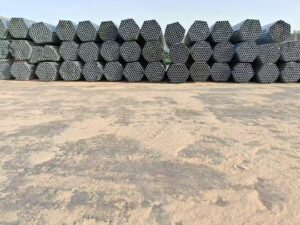
Starting from January 2025, turnover materials exported to Saudi Arabia need to apply for batch certificates (SC) through the SABER system in advance. Prolonged customs clearance processes may result in an additional 1-2 weeks of delivery time. In addition, fluctuations in international steel prices directly affect costs, such as galvanized steel pipe prices reaching $700-1000 per ton, an increase of 15% -20% compared to 2024.
3、 Price and cost: significant upward pressure
Double increase in material and labor costs
The rise in prices of raw materials such as steel, cement, and aluminum has driven up the cost of turnover materials. For example, in the fourth quarter of 2024, the price of cement in Saudi Arabia increased by 31% year-on-year, and it is expected that the overall increase in construction costs will reach 5% -7% by 2025. At the same time, the shortage of specialized labor in mechanical operation, pipeline installation, and other fields has led to a decrease in construction efficiency, indirectly pushing up rental costs.
Differentiation of the rental market
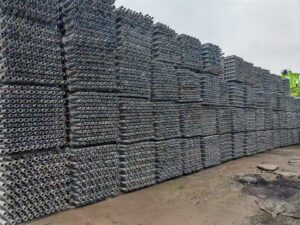
The rental price of traditional steel pipe scaffolding is about 3-5 US dollars/day/ton, while aluminum alloy scaffolding has a rental premium of 40% (about 6-8 US dollars/day/ton) due to its advantages of lightweight and high turnover. Local suppliers in Riyadh, such as NAJD Scaffolding Company, saw a 30% year-on-year increase in business volume, but high-end equipment still relies on European and American brands.
4、 Policy and Market Competition: Localization and Internationalization Game
Policies promote industrial upgrading
Saudi Arabia demands that the proportion of local components in construction projects be increased to 40% by 2025, forcing companies to purchase locally produced templates, safety nets, and other products. At the same time, the promotion of green building regulations (such as the NEOM project requiring 100% renewable energy) has increased the demand for environmentally friendly turnover materials (such as biodegradable plastic templates).
Deep involvement of international enterprises
Chinese companies penetrate the market through the “engineering+industrial park” model, for example, CITIC Construction has laid out its building materials supply chain in Riyadh, while companies such as China National Building Materials and China Railway Construction have seized market share through the BME Building Materials Exhibition (facilitating a 20 billion riyal transaction by 2025). European and American companies dominate the high-end market with technological advantages, such as Spain’s RESA Group providing intelligent lifting platform leasing services in Riyadh.
5、 Risk and Response Strategies
Supply chain fluctuation risk
It is recommended that companies lock in import orders 6-8 months in advance and establish strategic inventory with local suppliers (such as Saudi Cement Company holding 600000 tons of black clinker inventory). Meanwhile, pay attention to the SC certificate application process to avoid customs clearance delays.
Cost control suggestions
Adopting a combination strategy of “leasing+customized procurement”: short-term projects lease equipment to reduce fixed costs, while long-term projects strive for price discounts through bulk procurement (such as ordering 500 tons of galvanized steel pipes at once). In addition, participating in government supported localized production projects (such as CITIC Industrial Park) can enjoy tax incentives.
summarize
In 2025, the construction turnover materials market in Riyadh, Saudi Arabia will exhibit characteristics of “strong demand, rising costs, and policy leadership”. Enterprises need to address challenges through supply chain optimization, localized cooperation, and technological upgrades while grasping the dividends of infrastructure. It is expected that in the second half of the year, with the production of building materials industrial parks and the alleviation of labor shortages, the market will gradually move towards supply-demand balance, but the high price trend may continue until early 2026.